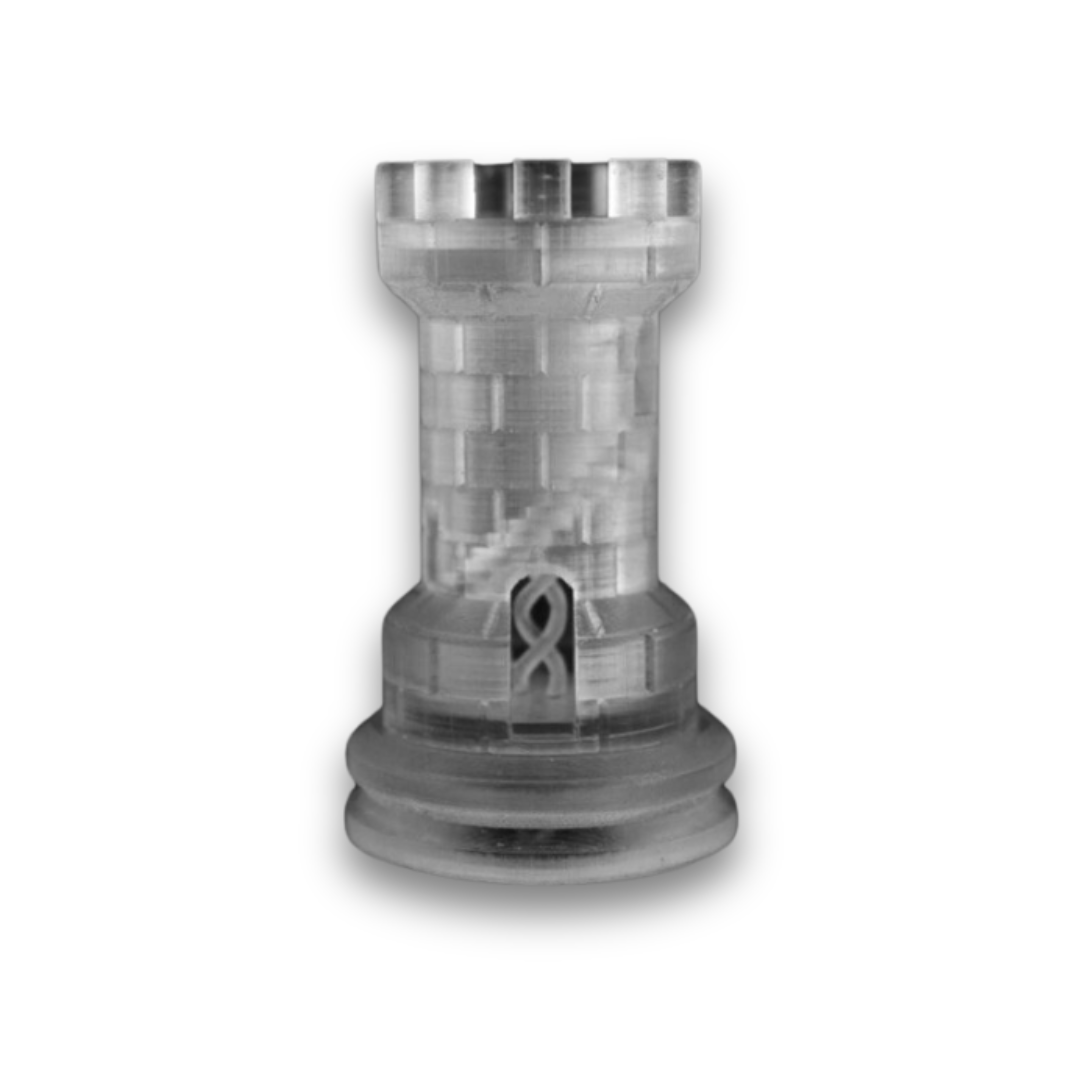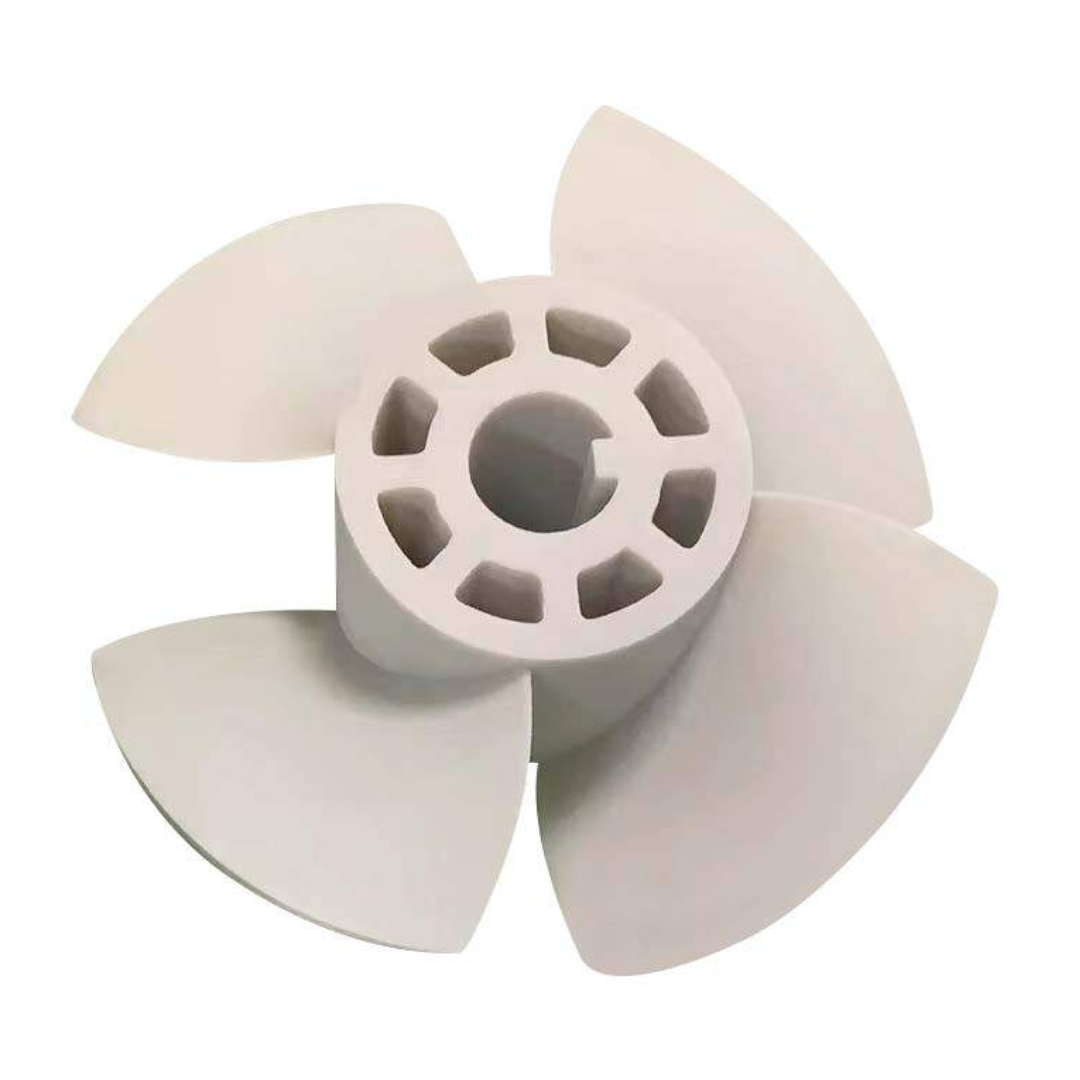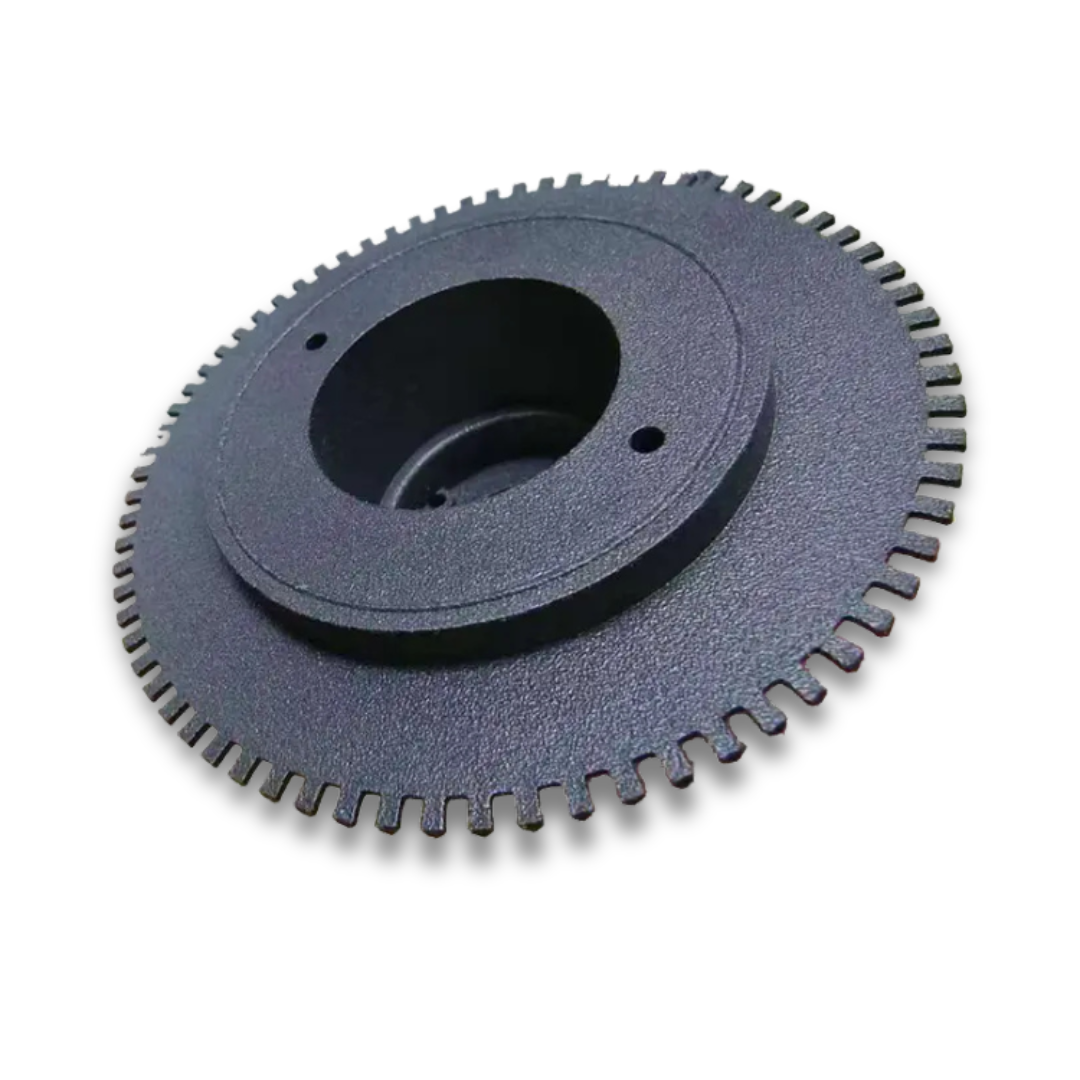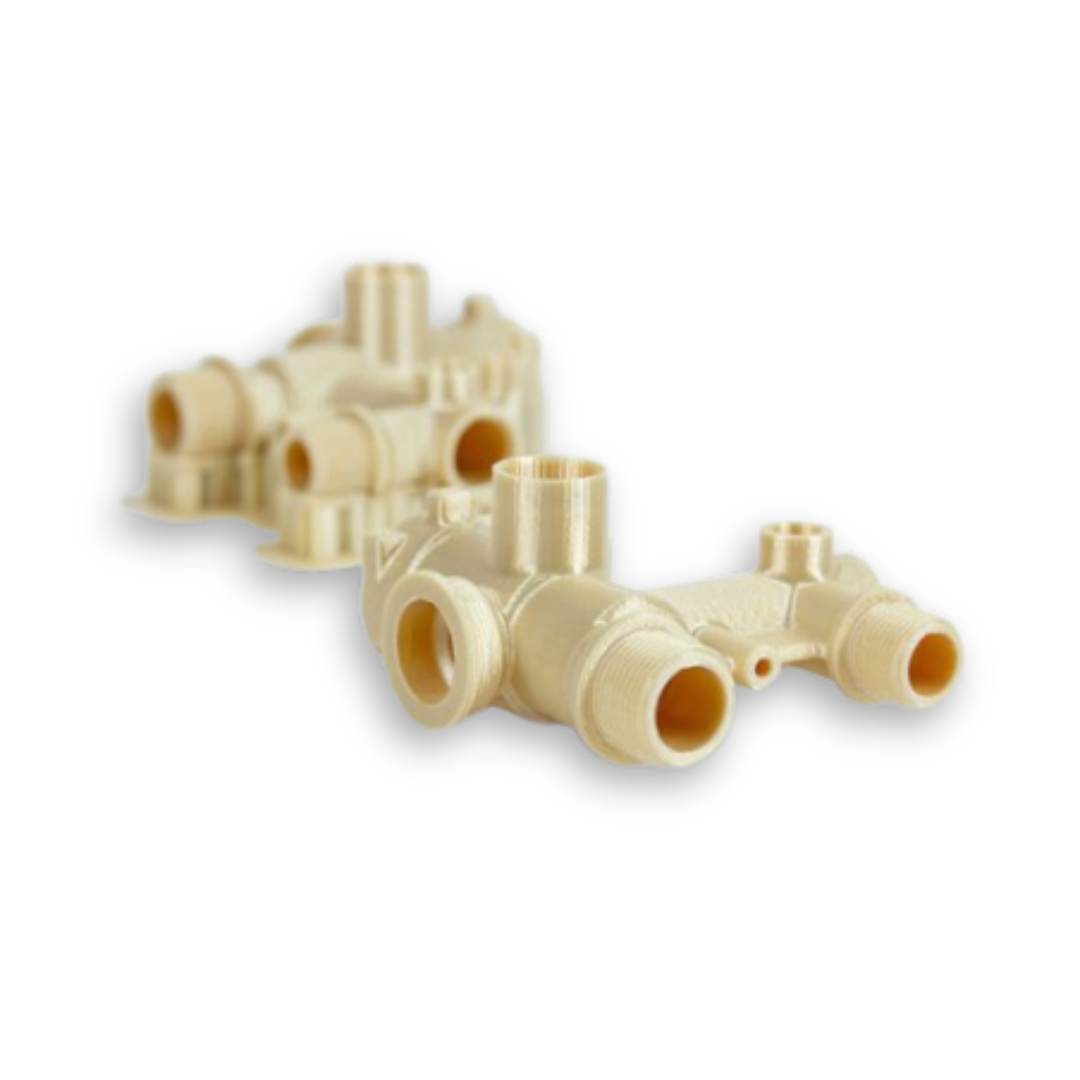


For product designers and engineers, bridging the gap between a digital CAD file and a physical, production-grade part is a critical challenge. Crucially, you need prototypes that look, feel, and perform like the final product for critical testing and marketing. Investing in expensive metal hard tooling for injection molding is often premature for just a dozen parts.
Enter vacuum casting prototyping.
Often called “urethane casting,” this process is the unsung hero of rapid prototyping. It offers the perfect middle ground, delivering high-fidelity parts with material properties similar to final production plastics, without the high upfront costs or long lead times of traditional tooling.
This guide will dive deep into what vacuum casting is, the precise steps involved, and why it might be the ideal solution for your next low-volume project.
What is Vacuum Casting?
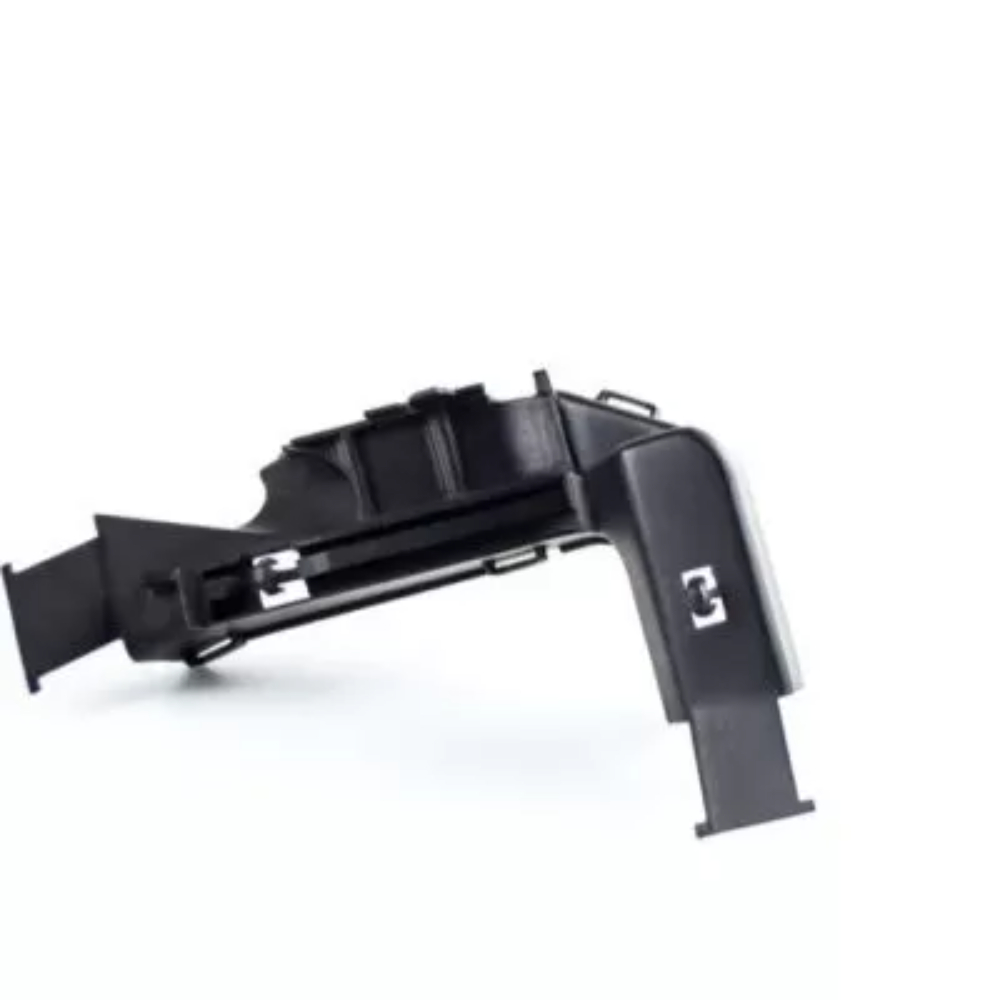
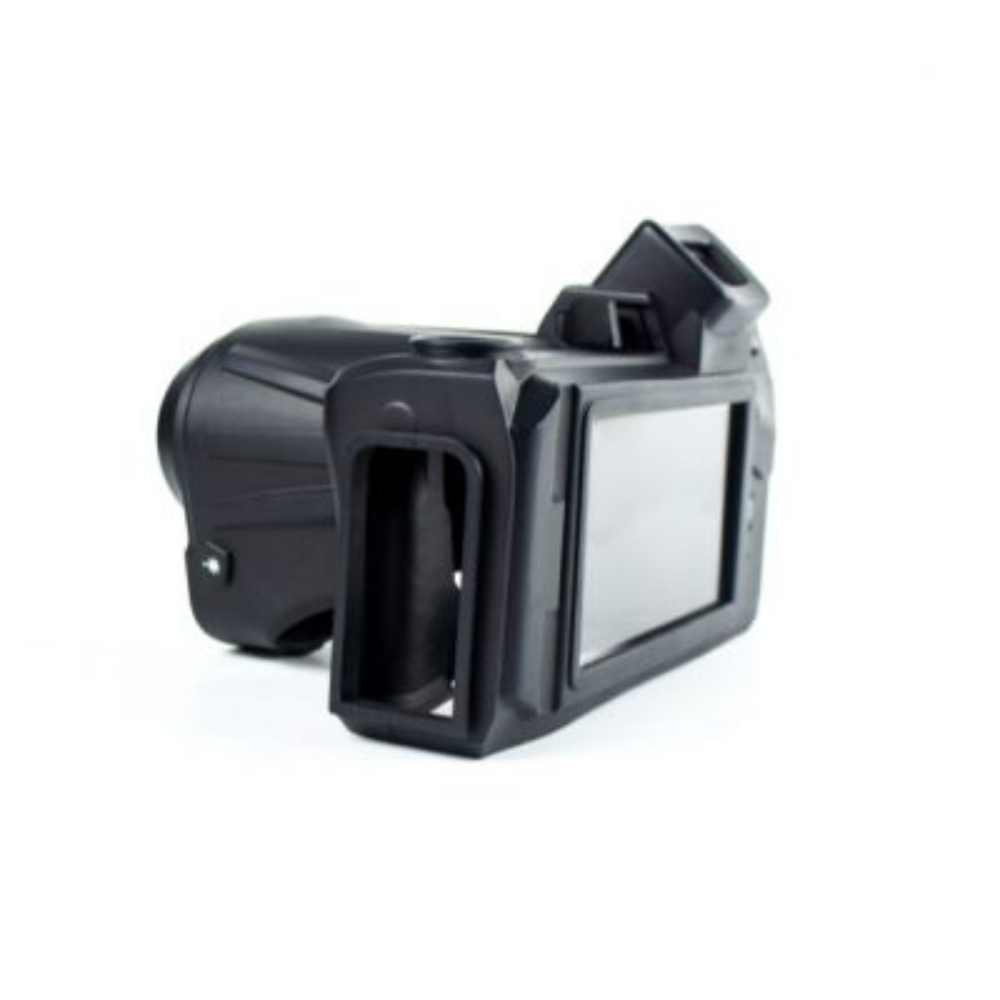
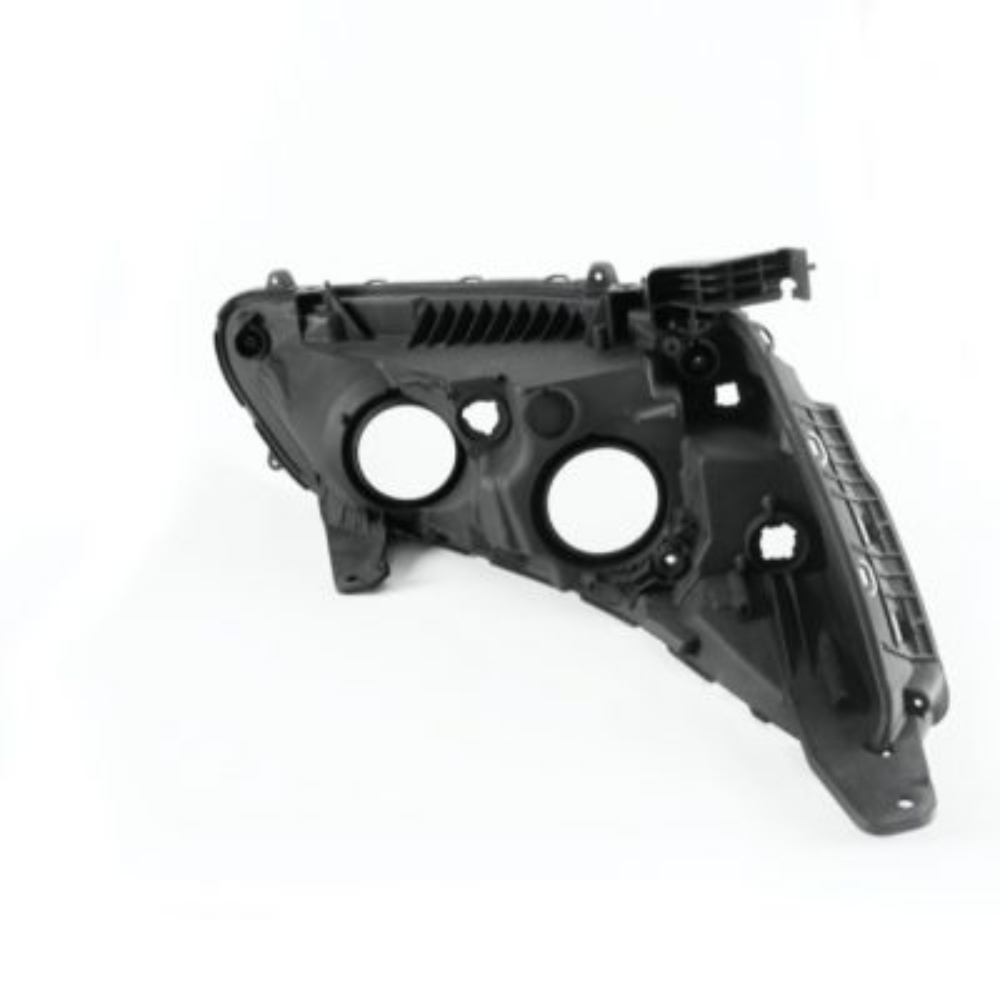
Vacuum casting is a versatile manufacturing technique used primarily for creating high-quality prototypes and short production runs of plastic parts.
While 3D printing builds parts layer by layer through an additive process, vacuum casting relies on silicone molds to shape liquid resins into precise forms. More importantly, the process distinguishes itself through the deliberate use of a vacuum chamber. By actively removing atmospheric pressure, the system forces the liquid resin into every intricate cavity of the mold.
Consequently, the pressure differential actively drives out trapped air bubbles, thereby improving both the part’s surface finish and its structural strength.
The result is a bubble-free, highly accurate replica of a master pattern, possessing excellent surface finish and mechanical properties.
The Step-by-Step Vacuum Casting Process
The journey from concept to cast part involves a delicate balance of technology and craftsmanship. Here is a detailed look at how the vacuum casting process works:
1. Creating the Master Pattern
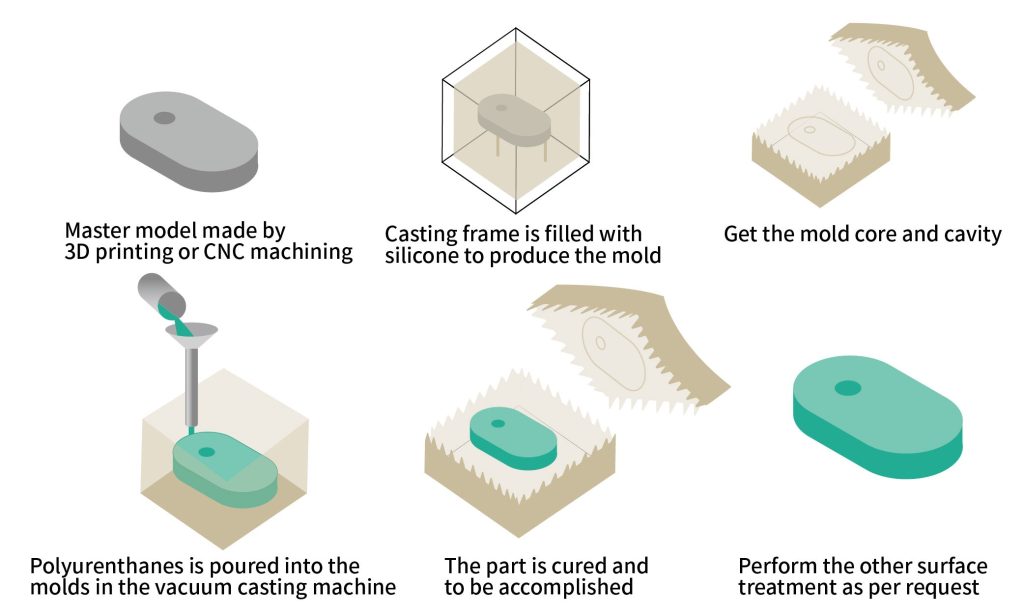
Everything starts with a master pattern—the “original” that will be cloned. Because the final parts will be exact replicas of this pattern, its quality is paramount. The master is typically created using high-resolution 3D printing technologies like Stereolithography (SLA) to ensure a perfect surface finish, or through CNC machining for precision.
2. Creating the Silicone Mold (Soft Tooling)
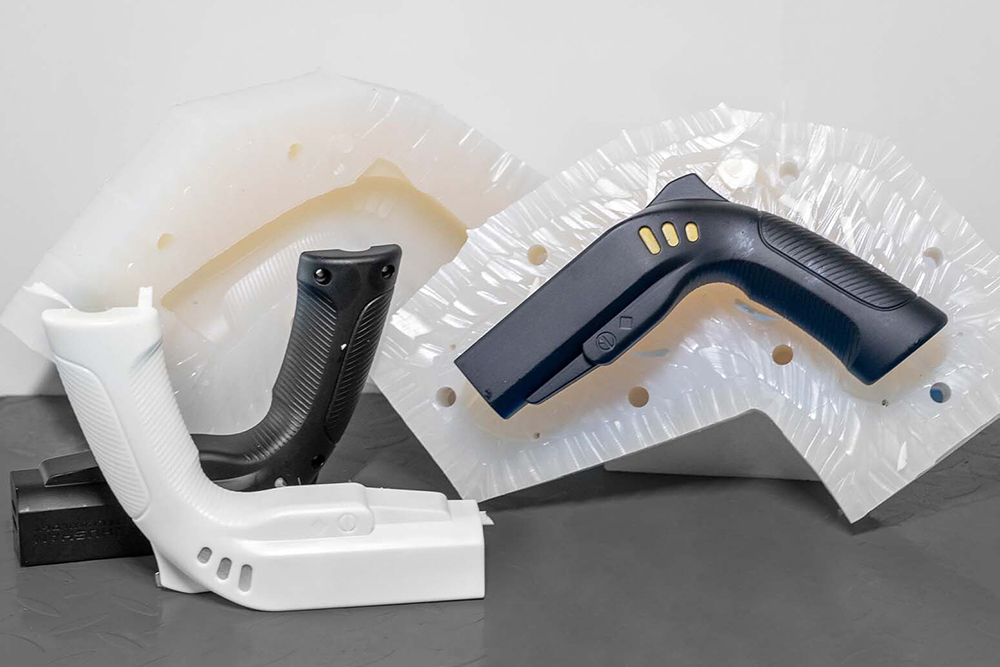
Once the master pattern is finished to the desired texture (e.g., glossy, matte, or textured), it is suspended in a casting box. Liquid silicone rubber is poured around the pattern.
Why silicone? It is durable, heat-resistant, and, crucially, flexible. This flexibility allows the mold to be cut open and removed from complex shapes with undercuts without damaging the mold or the master. Once cured, the silicone block is cut in half in a parting line defined by the engineer, and the master pattern is removed, leaving a perfect negative cavity.
3. Degassing and Pouring
First, operators reassemble the silicone mold and position it inside the vacuum casting machine. Meanwhile, they preheat the selected polyurethane resin and degas it in a separate chamber to eliminate residual moisture and entrapped air.
Subsequently, under controlled vacuum conditions, technicians pour the conditioned resin into the mold. As the vacuum reduces internal pressure, it drives the liquid material into every corner of the complex geometry; consequently, it prevents air pockets from forming within the final part.
4. Curing the Resin
Once poured, the mold is moved to a heating chamber or oven to cure. The applied heat consequently drives the curing reaction and solidifies the resin. Yet because geometry and material formulation regulate heat transfer and reaction speed, curing times can extend from a few minutes to several hours.
5. Demolding and Finishing
After the part has fully solidified, the silicone mold is carefully opened, and the new part is removed.
Subsequently, operators clean, inspect, and recondition the mold to initiate the next pouring cycle efficiently.
Thereafter, technicians proceed to the finishing stage, where they first remove the gates and runners—the channels that directed resin into the mold—and then systematically perform post-processing operations such as sanding, painting, plating, or installing metal threaded inserts. Through these final refinements, they ensure the component meets the required aesthetic standards and functional specifications.
The Key Benefits of Vacuum Casting
Why choose vacuum casting over 3D printing or jumping straight to injection molding?
Exceptional Fidelity and Quality: The parts produced are near-injection-mold quality. They perfectly replicate the surface texture of the master pattern, whether it’s a high-gloss finish or a fine leather grain.
Material Versatility: You are not limited to basic prototyping plastics. Vacuum casting uses a wide range of polyurethane resins formulated to mimic engineering thermoplastics like ABS, PP, polycarbonate, and even various grades of rubber (elastomers).
Cost-Effective for Low Volumes: For quantities between 10 and 50 parts, vacuum casting is significantly cheaper than cutting steel aluminum tools for injection molding.
Rapid Turnaround: Once technicians finalize the master pattern, they can fabricate silicone molds within days and begin casting parts immediately afterward.
Design Flexibility: The flexibility of silicone molds allows for the casting of complex geometries, undercuts, and thick-wall sections that might be difficult or impossible with other methods.
Applications of Vacuum Casting
Vacuum casting is used in a variety of industries, including:
Automotive
- Produces prototypes and low-volume parts for cars, trucks, and motorcycles
Aerospace
- Creates lightweight and durable components for aircraft and spacecraft
Electronic and Consumer Goods
- Manufactures toys, electronics, medical devices, and equipment
Home Decor and Luxury Items
- Crafts high-quality decorative pieces
Limitations of vacuum casting
Despite its many advantages, engineers must carefully evaluate several limitations before initiating a project with this process.
Material Restrictions
- Suitable only for specific materials
Prototype Quality
- Affected by the type of mold used
Shrinkage Issues
- Parts may become too thin or too thick
Production Speed
- Relatively slow, not ideal for large-scale production
Temperature Limitations
- Not suitable for high-temperature applications
Summary
Projet offer a range of capabilities such as vacuum casting, additive manufacturing, and along with various solutions like rapid prototyping, mechanical design, and reverse engineering. We eagerly anticipate the opportunity to support your company in its processes.
Connect with Projet:
If you’ve had a positive experience with Projet that you’d like to share, please reach out to us at enquiry@projettech.com. We eagerly anticipate hearing from you.
For additional information, visit our website for comprehensive details about our services and contact information. Our friendly team is ready to assist you at any time.